
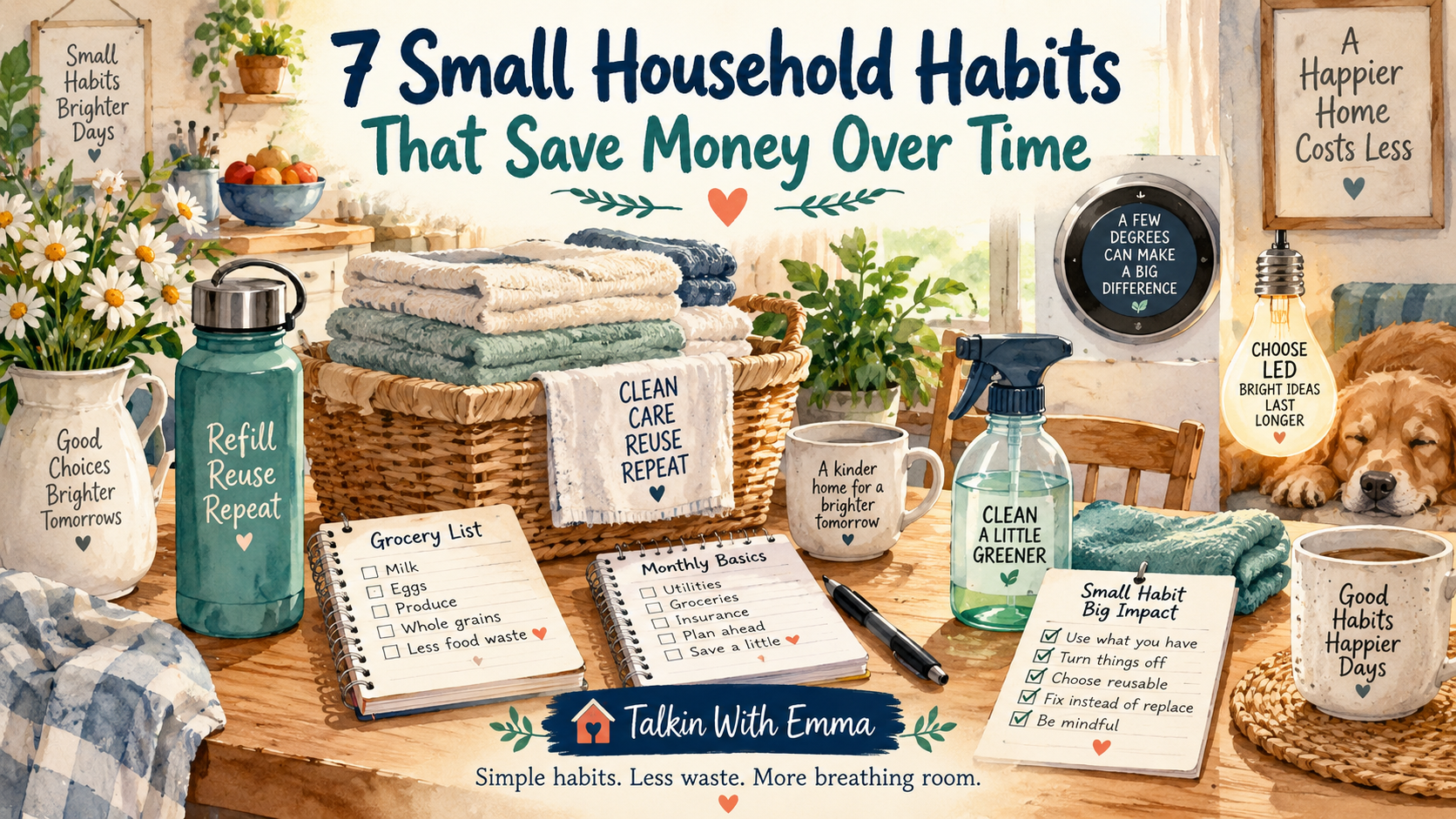
Saving money at home does not always mean making a big change.
Sometimes it is the small things you do over and over that make the biggest difference.
A few dollars here and there may not feel important in the moment. But when the same small savings happen every week or every month, they can add up.
Here are seven household habits that can help you spend a little less without turning your life upside down.
1. Check Recurring Charges Once a Month
Subscriptions are easy to forget because they happen automatically.
Once a month, take a few minutes to look at the recurring charges coming out of your bank account or credit card.
Ask yourself:
- Do I still use this?
- Has the price changed?
- Am I paying for two services that do almost the same thing?
- Is there a cheaper plan that would work just as well?
You do not have to cancel everything. The goal is simply to notice what you are paying for.
2. Make a Short Grocery List Before You Shop
You do not need a complicated meal plan to save money on groceries.
A short list can help.
Before you leave for the store, look through the refrigerator, freezer, and pantry. Then write down what you actually need.
This can help prevent buying duplicates, forgetting ingredients, and making extra trips later in the week.
It also makes it easier to use food you already have before it goes bad.
3. Use Appliances in Full Loads When You Can
Running the dishwasher or washing machine for only a few items can use nearly as much water and energy as a fuller load.
You do not need to pack appliances so tightly that they stop working properly. Just try to avoid running them half-empty when waiting a little longer would be easy.
It is a small habit, but over time it can mean fewer cycles and less wasted water and electricity.
4. Give the Thermostat a Little Attention
Heating and cooling can be a large part of a household utility bill.
You do not need to make your home uncomfortable to save money.
Instead, pay attention to small changes. A slightly different thermostat setting when you are asleep or away may help reduce energy use.
Also check simple things that affect how hard the system has to work, such as:
- dirty air filters,
- doors or windows left open,
- sunlight heating a room you are trying to cool, and
- vents blocked by furniture.
Little adjustments can matter when they happen every day.
5. Maintain Things Before They Break
Routine maintenance is not exciting, but repairs are usually even less exciting.
Changing filters, cleaning dryer vents, checking appliance hoses, keeping gutters clear, and following basic maintenance schedules can help household equipment last longer.
Not every breakdown can be prevented. But taking care of what you own can reduce avoidable problems and help you notice trouble earlier.
A small maintenance cost today may be much easier to handle than a major repair later.
6. Review Bills and Renewals Instead of Letting Them Roll Over
It is easy to let insurance, internet, phone service, and other household bills renew without looking at them.
Before a renewal or contract change, take a few minutes to check:
- what you are paying now,
- whether the price increased,
- whether you still need all the features or coverage included, and
- whether another option is worth comparing.
You do not need to switch companies every year. Sometimes the current option is still the best one.
The useful habit is checking instead of assuming.
7. Do a 10-Minute Weekly Money Check
A weekly money check does not have to be a full budgeting session.
Set aside about 10 minutes and look at what is coming up.
You might check:
- your current account balance,
- bills due in the next week,
- automatic payments,
- any unusual charges, and
- whether you need to move money before something is due.
This habit can make money feel less surprising.
It is often easier to deal with a small issue when you notice it early rather than after a payment is missed or an account is overdrawn.
Small Habits Work Because They Repeat
None of these habits will magically cut your household expenses in half.
That is not really the point.
The goal is to make a few useful choices often enough that they start working in the background.
Check what you are paying for. Use what you already have. Take care of the things you own. Give upcoming bills a quick look.
You do not need to do everything perfectly.
A small habit that you actually keep is usually more useful than a perfect money plan that lasts for three days.
— Emma
Leave a Reply