
Tag: Household Emergencies

  • 10 Household Emergency Supplies You Should Actually Check Before You Need Them

    10 Household Emergency Supplies You Should Actually Check Before You Need Them

    Buying emergency supplies feels productive.

    Checking them later is the part people forget.

    A flashlight can sit in a drawer for two years and still look perfectly fine right up until the moment you need it and discover the batteries are dead.

    A backup charger is useful only if it is charged.

    A first-aid kit is helpful only if the things inside it are still usable.

    That is why emergency preparedness is not just about owning things.

    It is about knowing they work.

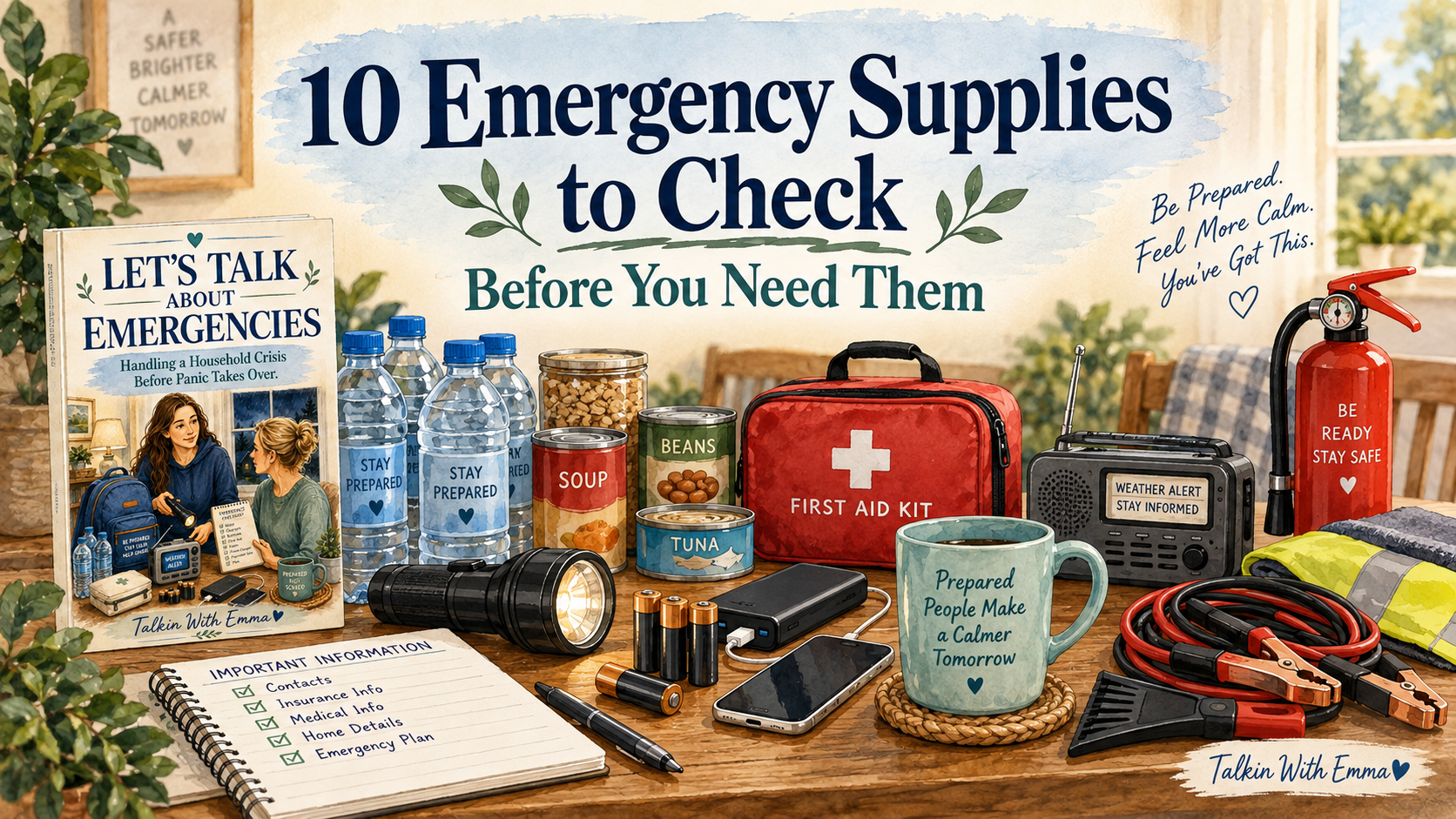
    Here are ten household emergency supplies worth checking before you need them.

    1. Flashlights

    Start simple.

    Find the flashlights you would actually reach for during a power outage.

    Turn them on.

    If they are dim, flickering, or dead, replace or recharge the batteries.

    It is also worth checking whether everyone in the household knows where the flashlights are.

    A working flashlight is not much help if nobody can find it in the dark.

    2. Spare Batteries

    Loose batteries have a habit of migrating into junk drawers.

    Then, when you need them, you have no idea which ones are fresh.

    Check the batteries you keep for emergency items and make sure you have the right sizes for the things you actually own.

    If you use rechargeable batteries, make sure the charger works too.

    3. Backup Phone Chargers

    A portable battery pack can be incredibly useful during a power outage, severe weather event, or car problem.

    But only if it has power in it.

    Check the charge level.

    Recharge it if needed.

    If you keep charging cables with it, make sure they still fit the phones and devices your household currently uses.

    Technology changes. Your emergency kit should keep up.

    4. First-Aid Supplies

    You do not need a giant medical bag for normal household preparedness.

    You do need the basics to be usable.

    • Bandages
    • Gauze
    • Medical tape
    • Antiseptic supplies
    • Gloves
    • Thermometer
    • Any other basic items you rely on

    Replace anything damaged, missing, dried out, or expired where expiration dates apply.

    And if your first-aid kit is buried behind six boxes in a closet, consider moving it somewhere easier to reach.

    5. Emergency Radio

    If you keep a battery-powered or hand-crank radio, test it.

    Make sure it turns on.

    Check the batteries.

    Make sure you know how to switch between normal radio and weather alerts if your model has that feature.

    This is one of those items people can own for years without ever turning on.

    The middle of a storm is not the best time to learn how it works.

    6. Drinking Water

    Check your emergency water supply.

    Look for leaks, damaged containers, or supplies that need to be rotated.

    Also think realistically about how much you have.

    A couple of bottles may help for a short interruption.

    A longer water problem can require considerably more.

    You do not have to build a bunker.

    Just make sure the amount you keep matches the kind of emergency planning you are trying to do.

    7. Shelf-Stable Food

    Emergency food does not have to be fancy.

    It does have to be edible.

    Check dates and packaging on the food you keep for outages or severe weather.

    Rotate older items into normal meals before they become unusable and replace them with fresh ones.

    It is much easier to manage emergency food when it is food you already eat.

    8. Fire Extinguishers

    Look at your household fire extinguishers.

    Make sure they are still where they belong, easy to reach, and showing the correct pressure if your extinguisher has a gauge.

    If one looks damaged, discharged, or questionable, replace or service it according to the manufacturer’s instructions.

    Also make sure the people in your household know where the extinguisher is.

    That is worth repeating because emergency supplies have a strange tendency to disappear behind coats, boxes, and furniture.

    9. Important Information

    Some emergency supplies are not physical equipment.

    Check your list of important phone numbers, insurance information, medication details, emergency contacts, and household information.

    Is it current?

    Would you still be able to find it if your phone were dead?

    A paper copy of a few important details can be surprisingly useful.

    You do not need to print your entire life.

    Just keep the information you would really need if things became stressful.

    10. The Supplies in Your Car

    Household emergency planning should not stop at the front door.

    Take a quick look at what is in your vehicle.

    • Flashlight
    • Phone charger
    • Jumper cables or jump pack
    • Basic first-aid supplies
    • Water
    • Blanket
    • Tire tools
    • Reflective warning equipment

    What you carry will depend on where you live, how far you drive, and the weather you deal with.

    Someone driving rural roads in winter may need a very different setup from someone who rarely leaves town.

    The point is to prepare for your actual life.

    Emergency Supplies Are Only Useful If They Work

    You do not need to check everything every week.

    That would get old quickly.

    A better approach is to pick a couple of times a year to go through your emergency supplies.

    You might do it before storm season.

    Or when the clocks change.

    Or at the beginning of summer and winter.

    Choose something you will remember.

    Then test, recharge, replace, and rotate what needs attention.

    Preparedness does not have to be complicated.

    Sometimes it is as simple as discovering the flashlight batteries are dead on a normal Tuesday instead of during a midnight power outage.

    That is a win.

    If you want a broader, practical guide to handling outages, severe weather, water problems, car trouble, and other everyday emergencies, Let’s Talk About Emergencies walks through those situations in plain English, one step at a time.

    — Emma
    Share This Conversation
  • What Information Would You Need If Your Phone Died During an Emergency?

    What Information Would You Need If Your Phone Died During an Emergency?

    Let me ask you something.

    If your phone died right now, how much important information would disappear with it?

    I don’t mean gone forever. I mean gone at the exact moment you might actually need it.

    Your contacts are in your phone. Your insurance app is in your phone. Your pharmacy number is in your phone. The address you were supposed to meet at? Probably in a text somewhere.

    Most days, that works just fine.

    Then the battery dies.

    Or the power is out.

    Or you can’t get a signal.

    Or you’re standing there thinking, I know I have this information somewhere.

    That is not the best time to start hunting for it.

    You do not need an emergency command center

    I am not suggesting you create a three-inch binder with tabs, laminated maps, and seventeen backup plans.

    If that makes you happy, carry on.

    For the rest of us, I’d start with one simple question:

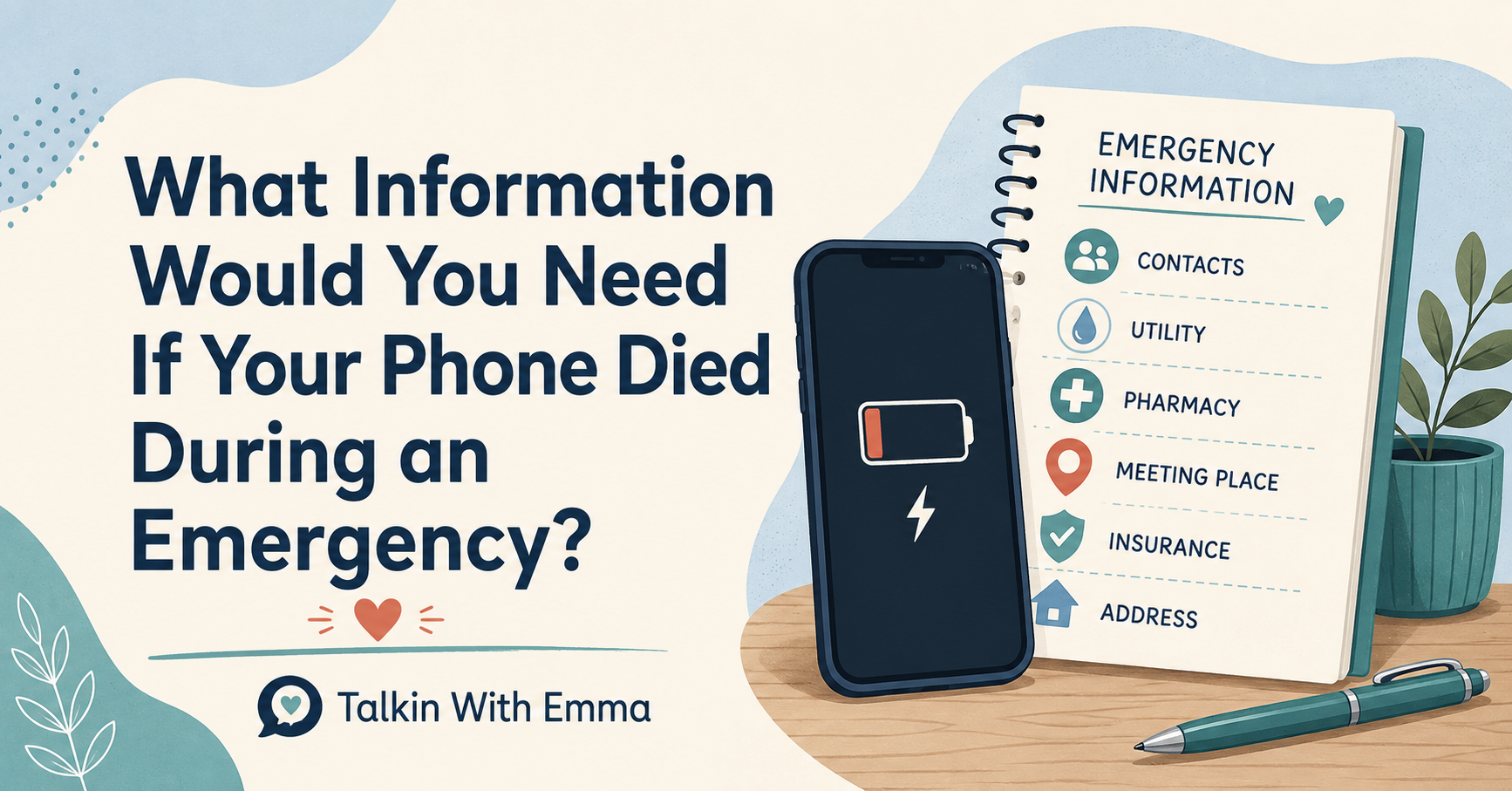
    What information would I be annoyed, stressed, or stuck without if my phone stopped working?

    Write that down on paper.

    That’s the whole idea.

    Start with the people you would actually call

    Who would you need to reach first?

    Maybe that is your spouse, your adult child, your parent, your neighbor, or the friend who somehow always answers the phone.

    Write down the numbers for the people who matter most.

    And here’s one I really like: choose one person who lives outside your immediate area.

    If something is affecting your whole neighborhood or town, it can help to have one person farther away who everyone knows to contact.

    You do not need twenty names.

    You need the few names you would actually use.

    Write down the numbers you usually look up

    This is where people tend to say, “Oh, I can just Google that.”

    Usually, yes.

    But we are talking about the moment when “usually” may not be cooperating.

    Think about the numbers you would want if something went wrong at home.

    Your electric company.

    Gas company, if you have one.

    Water utility.

    Landlord or property manager, if that applies.

    Your insurance company or agent.

    Your pharmacy.

    Your veterinarian, if there is an animal in the house who thinks emergency planning is beneath them.

    You do not have to collect every number connected to your life. Just the ones that would be a pain to find when you are already dealing with something else.

    Keep the addresses that matter

    We rely on maps so much now that a lot of us barely remember addresses.

    I am including myself in that sentence.

    If your household has a meeting place, write down the actual address.

    If there is a relative’s house you might go to, write that down too.

    If your child, parent, or another household member has a place you would need to reach, include it if it makes sense for your situation.

    The point is not to create a directory.

    The point is to keep yourself from having to reconstruct basic information while you are stressed.

    Add the information that belongs to your household

    This is the part that will look a little different for everybody.

    You might want:

    • insurance policy or claims contact information
    • important medical or pharmacy contacts
    • pet information
    • building or landlord contacts
    • an emergency meeting place
    • an out-of-area contact

    Notice what I did not say.

    I did not say put passwords, Social Security numbers, bank account numbers, or a pile of sensitive personal information on a sheet of paper and leave it on the kitchen counter.

    Useful is good.

    Useful and sensible is better.

    Then put the paper somewhere you can actually find it

    This part matters more than it sounds.

    If you make the list and tuck it into a mystery drawer behind old batteries and takeout menus, we have not improved much.

    Keep it somewhere your household knows to look.

    Maybe that is with your emergency supplies.

    Maybe it is inside a cabinet door.

    Maybe you keep one copy at home and another in your go-bag.

    Use whatever makes sense for your household.

    Just make sure the people who may need it know it exists.

    One last thing: update it

    A beautiful emergency list with your old pharmacy, your former landlord, and the phone number your sister changed two years ago is not especially helpful.

    You do not need to review it every Thursday at 7:15 p.m.

    Just look at it when something changes.

    You move.

    You change insurance companies.

    You switch pharmacies.

    Someone gets a new phone number.

    Take thirty seconds and fix the list.

    Here’s where I’d start

    Grab one piece of paper.

    Write down:

    • three people you would want to reach
    • one out-of-area contact
    • your main utility numbers
    • your insurance contact
    • your pharmacy or other important household contact
    • your emergency meeting place and address

    That is enough for today.

    You can make it prettier later if you want.

    For now, you have taken something that lived only inside your phone and made it available even when the phone is not.

    That is the kind of emergency preparation I like.

    Simple. Useful. And actually possible to do before lunch.

    I’ll be talking more about practical household preparedness next week because a new Talkin With Emma guide is almost here.

    Until then, maybe go write down the one phone number you are absolutely certain you know by heart.

    Then check whether you were right.

    — Emma

    Share This Conversation