
Tag: insurance coverage

  • What Happens If My Car Insurance Lapses for Just a Few Days?

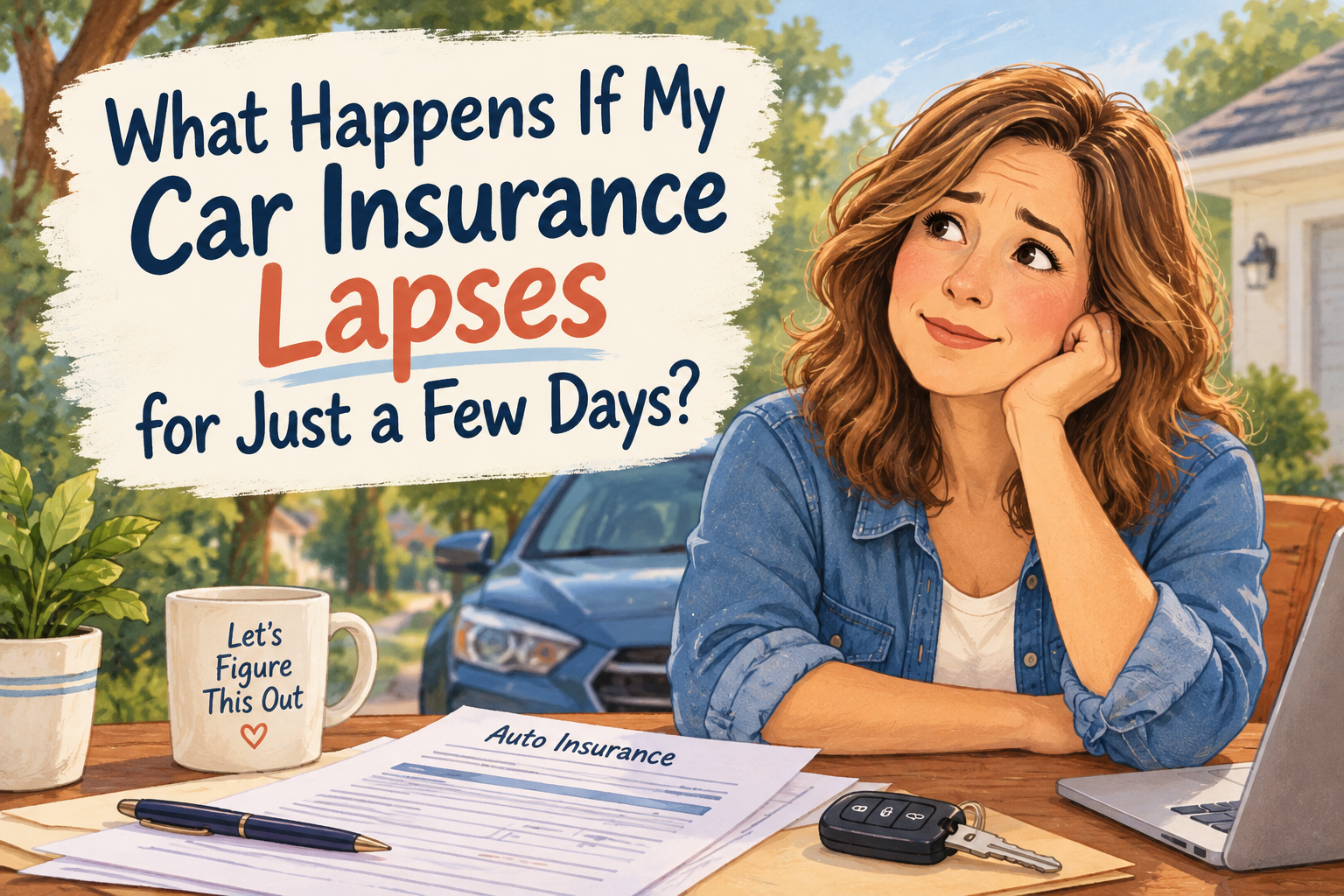
    What Happens If My Car Insurance Lapses for Just a Few Days?

    You open an email from your insurance company and realize your car insurance ended three days ago.

    Maybe a payment didn’t go through. Maybe the renewal date slipped past you. Maybe you were switching companies and thought the new policy started the same day the old one ended.

    Whatever happened, now you have one question:

    How bad is a three-day lapse, really?

    A few days without car insurance may sound minor. Unfortunately, insurance doesn’t work quite like that.

    If your policy actually ended, even a short gap can matter.

    The good news is that finding a lapse doesn’t mean you should panic. It means you need to figure out exactly what happened and fix it before you drive again.

    Let’s walk through it.

    First, Make Sure You Actually Have a Lapse

    A late payment and a lapse in coverage are not necessarily the same thing.

    If you missed a payment, don’t assume your insurance disappeared at midnight on the due date. Depending on your state, insurer, and policy, there may be cancellation-notice requirements or time to make the payment before coverage actually ends.

    But don’t assume you have a grace period, either.

    Call your insurance company or check your policy account and ask a very specific question:

    “Is my policy currently active, and have I had any gap in coverage?”

    You want dates.

    If the answer is no, ask:

    • What date and time did my coverage end?
    • Can the policy be reinstated?
    • If it is reinstated, will there still be a gap in coverage?
    • What do I need to pay or provide today?

    That last part matters because reinstating a policy doesn’t necessarily erase the days when you weren’t insured.

    If your policy ended Monday and coverage starts again Thursday, you shouldn’t assume Tuesday and Wednesday magically became insured days.

    If There Really Was a Gap, Don’t Drive Until You Have Active Coverage

    This is the most important part of this article.

    If you confirm that you currently don’t have the insurance required to drive your vehicle, don’t drive it until coverage is active again.

    Not to work.

    Not to the grocery store.

    Not because you’re only going five minutes down the road.

    I know that’s inconvenient.

    It’s still better than finding out what an uninsured accident costs.

    Suppose you cause an accident while your policy isn’t active. There isn’t an insurance company sitting behind you waiting to pay a covered liability claim under a policy that wasn’t in force.

    You could be personally responsible for damage you cause, subject to applicable law.

    And we’re not just talking about somebody’s bumper.

    An accident can involve another vehicle, medical bills, lost income, damaged property, legal expenses, and injuries that continue costing money long after the cars leave the scene.

    A three-day insurance lapse can become a very expensive problem if the accident happens on day two.

    Can the Insurance Company Just Backdate My Coverage?

    Don’t count on it.

    This is one of those ideas that sounds reasonable until you think about how insurance works.

    Imagine someone could drive uninsured, have an accident Tuesday, buy insurance Wednesday, and ask the company to make the policy effective Monday.

    Everybody could wait until something bad happened before buying insurance.

    That’s not how insurance is supposed to work.

    If your old insurer can reinstate your policy, ask exactly what the effective date will be and whether there is any lapse between the old coverage ending and the reinstated coverage beginning.

    Don’t assume.

    Get the dates.

    Will a Short Lapse Make My Insurance More Expensive?

    It can.

    Insurance companies consider many factors when pricing coverage, and insurance history can be one of them. A break in continuous coverage may affect your rate or your eligibility for certain discounts, depending on the company, state, and circumstances.

    That doesn’t mean a three-day lapse automatically makes your insurance unaffordable.

    It means you shouldn’t deliberately create a gap because you think a few uninsured days won’t matter.

    This is especially important when you’re switching insurance companies.

    I would much rather see you have the new policy begin before the old policy ends than discover afterward that you misunderstood one of the effective dates.

    When you’re changing companies, look at the actual dates on both policies.

    Don’t rely on: “I think the new one starts Friday.”

    Check.

    Your State May Care About the Lapse Too

    Your insurance company isn’t necessarily the only organization involved.

    States have their own insurance and vehicle-registration rules. Depending on where you live and what happened, a lapse could lead to consequences involving your vehicle registration, driver’s license, fines, proof-of-insurance requirements, or other penalties.

    That’s why I don’t want to give you one universal rule and pretend it applies in all 50 states.

    It doesn’t.

    If you’ve confirmed that your insurance actually lapsed, check with your state’s DMV, BMV, motor-vehicle agency, or insurance department to find out whether you need to do anything besides restoring your insurance.

    This becomes especially important if you’ve received a notice from the state.

    Don’t toss that letter on the counter and hope your new insurance policy makes it disappear.

    Find out what they’re asking you to do.

    If You Have a Car Loan or Lease, There’s Another Problem

    If you’re financing or leasing your car, pull out your loan or lease agreement.

    Your lender probably requires you to maintain certain insurance coverage on the vehicle.

    Why?

    Because until that loan is paid off, they have a financial interest in the car too.

    If your required coverage lapses, you may be violating the terms of your financing agreement.

    A lender may also purchase insurance to protect its interest in the vehicle and charge you for it. This is often called force-placed or lender-placed insurance.

    Don’t mistake that for a nice backup policy designed for you.

    Lender-placed coverage can be expensive and may primarily protect the lender’s financial interest rather than give you the coverage you would have selected for yourself.

    If you have a loan or lease and your insurance has lapsed, contact your insurer promptly and find out whether you also need to provide updated proof of coverage to your lender.

    What If I’m Not Driving the Car?

    This is where people sometimes get into trouble.

    You might think: “The car is sitting in my driveway. Why should I pay for insurance this month?”

    Depending on your situation, there may be ways to reduce or change coverage when a vehicle isn’t being used.

    But simply stopping payment isn’t a plan.

    Your state may have rules involving insurance and vehicle registration. If the car is financed or leased, your lender may require certain coverage even while you’re not driving it.

    And your car can still be damaged while parked.

    Theft, hail, fire, falling objects, vandalism, and other losses don’t wait for you to put the key in the ignition.

    If you know you won’t be driving for an extended period, call your insurer before canceling anything. Then check your state’s requirements and, if applicable, your lender’s requirements.

    There may be a perfectly reasonable way to handle the situation.

    Accidentally letting the policy disappear isn’t it.

    What Should I Do If My Car Insurance Has Already Lapsed?

    Let’s make this practical.

    If you discovered a lapse today, here’s the order I’d use.

    1. Stop driving until you confirm you have active coverage.

    If you’re currently uninsured, don’t add another problem to the one you’re already fixing.

    2. Contact your insurance company.

    Ask whether the policy can be reinstated and exactly when the reinstated coverage becomes effective.

    3. Get the dates in writing.

    You want to know when the old coverage ended and when the new or reinstated coverage begins.

    4. If the old policy can’t be reinstated, start shopping for replacement coverage immediately.

    Compare more than the price. Make sure you’re comparing similar coverages, limits, and deductibles.

    5. Check your state’s requirements.

    Find out whether the lapse affected your registration or created any additional steps you need to complete.

    6. If you finance or lease the vehicle, check your agreement and contact the lender if necessary.

    You may need to provide proof that required coverage is active again.

    7. Keep your new proof of insurance.

    Once everything is active, save the insurance card or other proof somewhere you can easily reach it.

    Then take five more minutes and figure out why the lapse happened.

    Fix the Reason It Happened

    This part gets overlooked.

    Getting insured again fixes today’s problem.

    It doesn’t necessarily prevent the next one.

    If your card expired, update the payment information.

    If there wasn’t enough money in the account when the automatic payment hit, consider whether a different payment date or billing arrangement would work better.

    If you missed an email, check your contact information and notification settings.

    If the premium became unaffordable, don’t just wait for the next cancellation notice. Ask about payment options, available discounts, different deductibles or coverage choices that are appropriate for your situation, and shop other insurers before the next payment is due.

    And if the lapse happened while switching insurance companies, write down one rule for next time:

    New coverage first. Old coverage second.

    Confirm the new policy is active before ending the old one.

    A Few Days Can Matter, but Fixing It Quickly Matters Too

    If you just discovered that your car insurance lapsed, I don’t want you spending the rest of the morning beating yourself up over it.

    I want you fixing it.

    Find out whether the policy actually lapsed.

    If it did, don’t drive uninsured.

    Call the insurer.

    Get the exact dates.

    Restore coverage or replace the policy.

    Check whether your state or lender requires anything else.

    Then fix whatever caused the lapse so you don’t have to do this twice.

    Insurance is much easier to deal with when we catch problems before they turn into claims.

    And if you’re shopping for replacement coverage, remember that the cheapest number on the screen doesn’t tell you whether two quotes actually provide the same protection. Compare the coverages, limits, deductibles, and important differences before deciding.

    That’s a lot less exciting than finding a bargain.

    It’s also a lot more useful.

    Want a Little More Help?

    If this lapse has you taking a closer look at your car insurance, you do not have to sort through everything at once. Start with the next thing that would actually help.

    Want to be better prepared before you call or compare coverage?
    Get the free Insurance Questions Checklist.

    Want a clearer explanation of how auto insurance works?
    Take a look at Let’s Talk About Auto Insurance.

    Want practical insurance, money, and everyday-life help in your inbox?
    Join Emma’s Mailbox.


    Important: Insurance laws, cancellation rules, registration requirements, policy terms, and lender requirements vary by state and situation. This article is general educational information, not individualized insurance, legal, or financial advice. Check your policy and contact your insurer, state insurance department or motor-vehicle agency, lender, or an appropriately licensed professional when you need information specific to your situation.
    Share This Conversation
  • Do You Actually Know What Insurance You Have? A 15-Minute Insurance Checkup

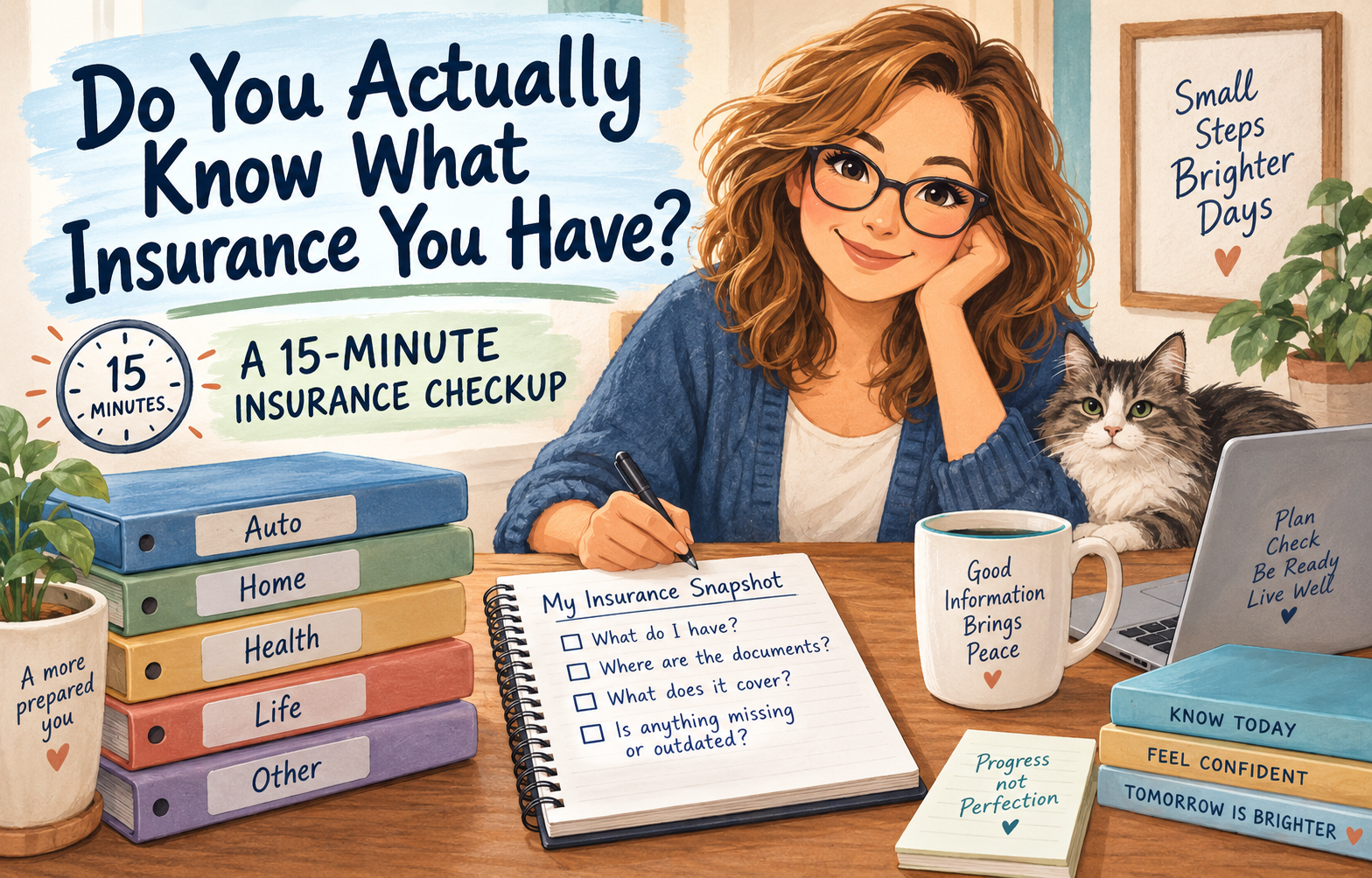
    Do You Actually Know What Insurance You Have? A 15-Minute Insurance Checkup

    If I asked you right now what insurance you have, could you tell me?

    Not just, “I have car insurance.”

    Could you tell me who the company is? When the policy renews? What your deductible is? Where you would find the policy if you needed it tonight?

    How about renters or homeowners insurance? Life insurance? Health insurance?

    If your answer is somewhere between “mostly” and “I think so,” you’re in good company.

    Insurance is one of those things we tend to set up and then stop thinking about. We pay the bill, renew the policy, and move on with our lives.

    Until we actually need it.

    So today, we’re not shopping for insurance. We’re not comparing quotes. And we’re definitely not spending hours reading policy documents.

    We’re just figuring out what you already have.

    Set a timer for 15 minutes.

    Step 1: Make a Quick List

    Start with the insurance policies you know you have.

    Your list might include:

    • Auto insurance
    • Homeowners or renters insurance
    • Health insurance
    • Life insurance
    • Disability insurance
    • Dental or vision coverage
    • Insurance through your employer
    • Any other specialty coverage you carry

    Don’t worry if you aren’t sure whether something belongs on the list. Write it down anyway.

    The goal isn’t to create a perfect insurance inventory. It’s to get everything out of your head and into one place.

    Step 2: Find the Policies

    Now see how many of those policies you can actually locate.

    That might mean finding a paper copy, opening an insurance company’s app, logging into an online account, checking your email, or looking through your employee benefits portal.

    For each policy, try to find four basic things:

    • Who is the insurance company?
    • What is the policy number?
    • When does the policy renew or end?
    • Where can you find the full policy information if you need it?

    You don’t need to memorize any of this. You just need to know where it is.

    That’s a surprisingly important distinction.

    If a tree falls on your house, your car gets hit in a parking lot, or someone in your family ends up in the emergency room, that’s not the moment you want to start searching old emails for an insurance policy you haven’t looked at in two years.

    Step 3: Check the Big Numbers

    If you still have a few minutes, look at the basic numbers on each policy.

    Depending on the type of insurance, that could include:

    • Coverage limits
    • Deductibles
    • Monthly or annual premiums
    • Life insurance benefit amounts
    • Health insurance copays or coinsurance
    • Out-of-pocket maximums

    You don’t need to understand every number yet. You’re simply taking inventory.

    If you see something you don’t understand, make a note of it. That’s something you can investigate later.

    Step 4: Look for the Obvious Gaps

    Now ask yourself a few simple questions.

    Has anything important changed since you bought these policies?

    Maybe you moved. Bought a house. Got married or divorced. Had a child. Bought a new car. Started working from home. Changed jobs. Started a side business. Bought expensive electronics, jewelry, tools, collectibles, or other property.

    Or maybe nothing dramatic happened—but you haven’t looked at your coverage in five years.

    None of those things automatically mean you need different insurance. They simply mean it’s worth checking.

    Step 5: Put Everything Somewhere You Can Find It

    This may be the most useful part of the entire exercise.

    Pick one place for your basic insurance information.

    It could be a folder in a filing cabinet, a secure digital folder, a notes app, or another system that works for you.

    You don’t necessarily need every giant policy document sitting together.

    You do want to be able to answer:

    What insurance do I have, who provides it, and where do I go when I need it?

    That’s your insurance snapshot.

    You’re Done

    Really.

    You don’t have to call three insurance companies today. You don’t have to request quotes. You don’t have to become an insurance expert.

    You spent 15 minutes figuring out what you already have.

    And now you have something much more useful than a vague feeling that you’re probably insured.

    You have a starting point.

    From there, you can decide whether anything deserves a closer look.

    Maybe your coverage is perfectly fine. Maybe you discover a policy you’ve been meaning to update. Maybe you find a deductible you didn’t realize was so high. Or maybe you discover one question you want to ask your insurance company or agent.

    That’s progress.

    Insurance gets much easier to deal with when you stop trying to understand everything at once.

    Start with what you have. Then take the next step when you’re ready.

    Want a Little More Help?

    If your 15-minute checkup gave you a question or two, that is useful. You can organize those questions first and learn more only where you need it.

    Want a simple free tool to help with the next step?
    Get the free Insurance Questions Checklist.

    Want to go a little deeper?
    Take a look at Let’s Talk About Insurance.

    Want practical insurance, money, and everyday-life help in your inbox?
    Join Emma’s Mailbox.


    This article is for general educational purposes and isn’t individualized insurance, financial, legal, or tax advice. Coverage, policy terms, and insurance requirements vary.

    Share This Conversation
  • 8 Insurance Mistakes That Can Cost You Thousands

    Nobody buys insurance hoping to use it.

    You buy it, pay the bill, and hope it sits there quietly doing absolutely nothing.

    That’s the best-case scenario.

    The problem is that insurance mistakes tend to stay hidden while nothing is happening. You can go months—or years—thinking everything is fine.

    Then there’s an accident, a storm, a theft, or some other very bad Tuesday, and suddenly the details matter.

    A lot.

    The good news is you don’t have to become an insurance expert to avoid some of the most expensive mistakes.

    You just need to know what to look for.

    Here are eight common insurance mistakes I’d start with.

    1. Buying the Cheapest Insurance Policy Without Checking Why It’s Cheaper

    Everybody likes saving money.

    If two companies seem to be offering the same insurance and one costs $40 less a month, of course you’re going to look at the cheaper one.

    I would too.

    But there’s one word in that sentence that matters:

    Seem.

    Two insurance quotes can have very different coverage even when they look similar at first glance.

    One might have a $500 deductible while the other has a $1,500 deductible.

    One may have higher coverage limits.

    Another may leave out coverage that’s included in the more expensive quote.

    That doesn’t mean the cheaper policy is bad. It might be exactly what you need.

    Just make sure you know what you’re giving up—if anything—to get that lower price.

    Think about it this way.

    Saving $30 a month puts $360 back in your pocket over a year.

    That’s great.

    But if getting that savings means taking on thousands of dollars of additional financial risk you didn’t realize you were accepting, that’s a different decision.

    Compare the coverage first.

    Then compare the price.

    If insurance language makes that difficult, start with Insurance Is Confusing: Insurance Basics in Plain English.

    And if you’re comparing quotes, the Insurance Needs Checkup & Quote Comparison Workbook can help you put premiums, deductibles, limits, and coverage side by side instead of comparing price alone.

    2. Choosing a Deductible You Couldn’t Actually Pay

    Higher deductibles can sometimes mean lower premiums.

    And when you’re trying to bring an insurance bill down, raising the deductible can look pretty attractive.

    But there’s another side to that decision.

    You may actually have to pay it.

    Suppose increasing your deductible from $500 to $2,000 saves you money every month.

    Fine.

    Now imagine something happens next Thursday.

    Could you come up with that $2,000?

    Not eventually.

    Not after three paychecks.

    When you need it.

    If the answer is no, that cheaper premium may have created a different financial problem.

    That doesn’t mean everyone should choose the lowest possible deductible. A lower deductible can make the premium more expensive, and you may be perfectly comfortable taking on more of the cost yourself.

    The number just needs to work with your finances.

    That’s the part that can get forgotten when we’re clicking through quote screens trying to make the monthly payment smaller.

    Before raising a deductible, look at your savings and ask yourself whether you could realistically handle it.

    If you couldn’t, at least you know the tradeoff you’re making.

    3. Assuming Something Is Covered Just Because You Have Insurance

    This may be one of the easiest insurance mistakes to make.

    You have homeowners insurance, so everything involving your house is covered.

    You have auto insurance, so everything involving your car is covered.

    You have health insurance, so every medical expense is covered.

    Except insurance generally doesn’t work that way.

    Policies have limits, conditions, and exclusions. Different types of coverage handle different risks.

    And sometimes the thing you assumed was covered isn’t.

    You don’t want to discover that while standing in your kitchen looking at water where water definitely isn’t supposed to be.

    Before you need the policy, get a basic understanding of what it covers—and what it doesn’t.

    You don’t have to read every page tonight.

    Start with the big stuff:

    • What events are covered?
    • What isn’t covered?
    • What are your limits?
    • What’s your deductible?
    • Are there situations where you may need separate or additional coverage?

    If you’re looking at those questions thinking, “I don’t even know where I’d find that,” don’t worry.

    Insurance policies aren’t exactly famous for being relaxing reading.

    Start with Insurance Is Confusing: Insurance Basics in Plain English if you need help with the language before digging into your actual policy.

    4. Carrying Too Little Coverage Because the Number Sounds Big

    Insurance numbers can be deceptive.

    $50,000 sounds like a lot of money.

    So does $100,000.

    Until you’re dealing with something that costs more.

    Imagine causing a serious accident involving several people.

    Or significant damage to your home.

    Suddenly the number doesn’t seem quite as enormous.

    The question isn’t whether your coverage limit sounds big when you say it out loud.

    It’s whether that limit makes sense for the financial risk you’re trying to protect against.

    And here’s where I’d be careful.

    There isn’t one magic coverage number that’s right for everybody.

    Your property, income, savings, debts, dependents, and ability to handle a financial loss can all affect the conversation.

    Instead of asking:

    “Is $100,000 a lot?”

    Try:

    “What am I trying to protect, and what happens if the loss is bigger than my insurance?”

    That’s a much more useful question.

    If you haven’t thought through what you’re protecting, the Insurance Needs Calculator can help you organize the pieces.

    It isn’t there to hand you a magic number and tell you what to buy.

    It’s there to help you see your situation more clearly.

    You can also read Do You Have Enough Insurance? 7 Signs Your Coverage May Need a Second Look for a broader coverage check.

    5. Forgetting to Update Your Insurance When Life Changes

    Insurance is remarkably good at sitting quietly in the background.

    Your life isn’t.

    You move.

    Get married.

    Get divorced.

    Have a baby.

    Buy something expensive.

    Start working from home.

    Add a teenage driver.

    Make improvements to the house.

    Start a side business that turns into an actual business.

    Meanwhile, the insurance policy you bought three years ago is still sitting there based on information from three years ago.

    That’s worth thinking about.

    Not every change requires different insurance.

    But some changes can affect what you’re protecting, who’s covered, how property is used, or how much financial risk you’re carrying.

    So when something significant changes, add one more question to the list:

    “Do I need to tell my insurance company about this?”

    It might take a five-minute phone call to find out.

    Five minutes now beats discovering later that something important was never updated.

    Not sure whether your current coverage still fits your life? Do You Have Enough Insurance? 7 Signs Your Coverage May Need a Second Look walks through some of the signs that it may be time for a review.

    6. Having No Record of What You Own

    Quick experiment.

    Without walking around your home, make a list of everything you own.

    Not just the expensive things.

    Everything.

    How’d you do?

    Probably not great.

    Most of us couldn’t come close.

    Now imagine trying to do it after a fire, major theft, or another disaster.

    You’re already dealing with the event itself, and now you’re trying to remember which television you owned, when you bought the laptop, what was in the closet, and whether you still have the receipt for a couch you bought four years ago.

    That’s not the moment I’d want to start building the list.

    A basic home inventory can make that job much easier.

    And this doesn’t have to become a six-week cataloging project.

    Walk through your home with your phone and take photos or video.

    Pay particular attention to higher-value items.

    Keep receipts or purchase records for major purchases when you have them.

    And store the information somewhere you could still access if something happened to your home.

    It doesn’t have to be perfect.

    Something is a whole lot better than trying to recreate everything from memory on one of the worst days of your year.

    7. Letting Your Insurance Coverage Lapse

    This one sounds obvious.

    Don’t let your insurance lapse.

    Done.

    Except lapses don’t always happen because someone deliberately decides, “You know what? I don’t need insurance anymore.”

    A payment gets missed.

    A credit card expires.

    Automatic payment doesn’t go through.

    A renewal notice goes to an old email address.

    Money gets tight and you tell yourself you’ll catch up next paycheck.

    Life happens.

    The danger is assuming you’re covered when you’re not.

    Depending on the type of insurance and where you live, a lapse can create more problems than simply being uninsured during that period. There may be legal or contractual requirements involved, and getting coverage again may not look exactly like picking up where you left off.

    If you’re struggling to afford a premium, don’t just ignore the bill and hope for the best.

    Call the insurer.

    Ask about your options.

    Review the policy.

    Shop around if you need to.

    See whether changing a deductible or adjusting optional coverage makes sense for your situation.

    And if your price suddenly increased, read Why Did My Insurance Premium Go Up When Nothing Changed? before assuming cancellation is your only option.

    Just make those decisions deliberately.

    Because finding out your policy isn’t active after something happens is about as bad as insurance surprises get.

    8. Waiting Until You Have a Claim to Learn How Claims Work

    Picture this.

    Something just happened.

    Maybe someone hit your car.

    Maybe a storm damaged your house.

    Maybe you came home and discovered something was stolen.

    You’re upset. You’re trying to figure out what happened. You’ve got phone calls to make and probably a dozen other things competing for your attention.

    And now seems like the perfect time to learn how an insurance claim works?

    Not really.

    Yet that’s when a lot of us first think about it.

    You don’t need to memorize your insurance company’s entire claims process in advance.

    You should, however, have a rough idea of what you’d need to do.

    Know how to contact your insurer.

    Know where your policy information is.

    Understand that documentation can matter.

    Depending on what happened and whether it’s safe to do so, that might mean photos, video, receipts, estimates, police or incident reports, or simply keeping notes about what happened and when.

    And keep copies of things.

    Emails.

    Documents.

    Receipts.

    Claim numbers.

    Names of people you speak with.

    If you’ve ever tried to remember the details of a phone conversation three months later, you already know why.

    There’s another reason I want you to understand the basics before there’s a claim.

    You may discover something about your coverage that you didn’t realize.

    And I’d much rather you discover that while sitting comfortably at your kitchen table than while dealing with whatever caused the claim.

    For now, the goal is simple.

    Know where your policy is.

    Know who you’d call.

    And if something happens, document what you can.

    That’s enough to put you several steps ahead of figuring everything out from scratch on a very bad day.

    If insurance terms are part of what makes this feel harder, grab the free Talkin With Emma Insurance Terms Cheat Sheet.

    The Expensive Part Usually Isn’t the Insurance Mistake

    It’s what happens afterward.

    Choosing a deductible that’s too high may not hurt you today.

    It becomes a problem when you need $2,000 next week and don’t have it.

    Not knowing your coverage limit isn’t costing you anything while everything is going well.

    It matters when a loss goes beyond that limit.

    Skipping the home inventory saves you twenty minutes today.

    It doesn’t feel quite as convenient when you’re trying to remember everything you owned after it’s gone.

    And not knowing how claims work isn’t particularly important while you don’t have one.

    Until you do.

    That’s what makes insurance tricky.

    A lot of the decisions don’t feel important when you make them because nothing bad is happening at the time.

    So don’t wait for something bad to make you look.

    Pick one policy.

    Not every policy you own.

    One.

    Look at the deductible.

    Find the coverage limits.

    Make sure you understand, at least generally, what’s covered and what isn’t.

    Check that the information on the policy still matches your life.

    And figure out where you’d start if you ever had to make a claim.

    Then you’re done for today.

    Seriously.

    Go do something more interesting.

    You Don’t Need to Become an Insurance Expert

    You just need to understand what you’re buying well enough to spot the decisions that could come back and bite you later.

    Understand enough to ask good questions.

    Know what you’re paying for.

    And try to find the expensive surprises before they become expensive.

    That’s a pretty good place to start.

    — Emma

    Want a Little More Help?

    You do not have to memorize every insurance rule to avoid common mistakes. A few good questions and a clearer understanding of your coverage can take you a long way.

    Want a simple free tool to help with the next step?
    Get the free Insurance Questions Checklist.

    Want to go a little deeper?
    Take a look at Let’s Talk About Insurance.

    Want practical insurance, money, and everyday-life help in your inbox?
    Join Emma’s Mailbox.

    A Quick Note Before You Go

    This article is for general educational purposes and isn’t individualized insurance, financial, legal, or tax advice. Insurance products, requirements, coverage, and policy terms vary by policy, insurer, and location. Review your policy documents and consider speaking with a licensed insurance professional about your individual situation.

    Share This Conversation
  • Do You Have Enough Insurance? 7 Signs Your Coverage May Need a Second Look

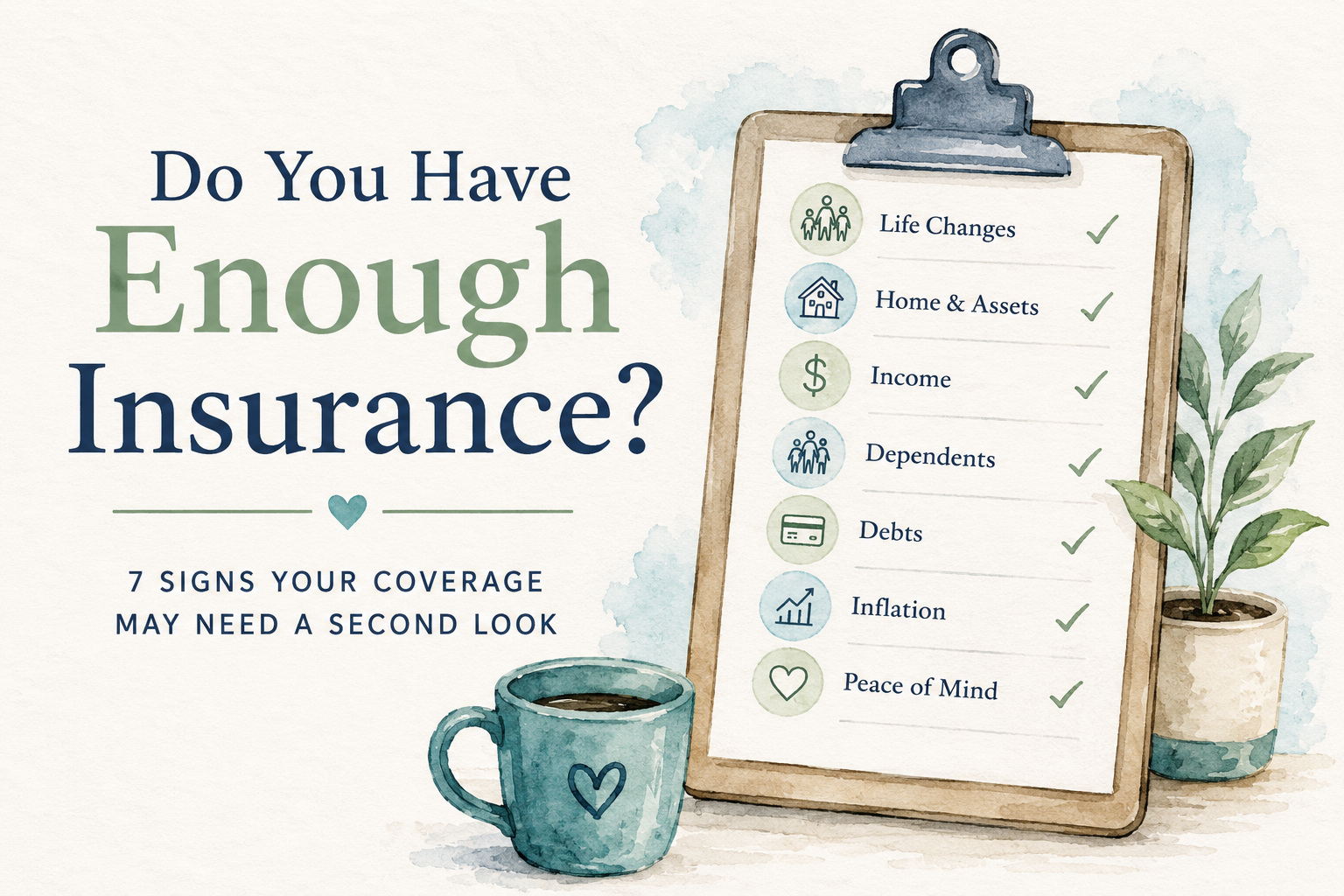
    Do You Have Enough Insurance? 7 Signs Your Coverage May Need a Second Look

    Most of us don’t spend much time thinking about insurance once we buy it.

    We pick a policy, make the payments, toss the paperwork in a drawer—or, more realistically, somewhere in our email—and get on with life.

    Which is fine.

    Until life changes and the insurance doesn’t.

    Maybe you’re making more money than you were a few years ago. Maybe you bought a house, got married, had a baby, paid off some debt, or somehow accumulated a garage full of stuff you definitely don’t remember buying.

    Or maybe money has gotten tighter.

    Any of those things can change what you need from your insurance.

    That doesn’t mean you should run out and buy more coverage. It doesn’t even mean there’s anything wrong with what you have now.

    It just means it might be worth taking another look.

    Here are seven signs it’s probably time.

    1. You Picked Your Insurance Mostly Because It Was Cheaper

    I understand this one.

    When you’re looking at two insurance quotes and one is $95 a month while the other is $112, that extra $17 gets your attention.

    Why pay more if you don’t have to?

    Sometimes the cheaper policy really is the better deal.

    But first, make sure you’re comparing the same thing.

    That $95 policy might have a higher deductible. Maybe the coverage limits are lower. Maybe the $112 policy includes something the cheaper one doesn’t.

    Now the comparison looks a little different.

    This is where insurance shopping can get frustrating. You’re staring at several quotes with different numbers, different coverage and different terminology, trying to remember which company offered what.

    Don’t compare the price by itself.

    Put the quotes next to each other and look at the coverage, limits and deductibles along with the premium.

    And if you’re staring at three quotes trying to remember which one had the $1,000 deductible and which one had the better limits, that’s exactly why we made the Insurance Checkup and Quote Comparison Worksheet. It gives you one place to put everything side by side.

    No more flipping between six browser tabs.

    2. You Couldn’t Tell Me Your Coverage Limits

    You don’t need to answer this out loud.

    But if I asked how much coverage your insurance actually provides, would you know?

    A lot of people wouldn’t.

    They know the monthly payment. They might know the deductible. Beyond that, things get fuzzy pretty quickly.

    That’s worth fixing.

    You don’t have to memorize every number on every policy. I certainly wouldn’t expect you to.

    But you should have a general idea of how much protection you’re paying for.

    Here’s why.

    Say something happens and the total financial loss is $100,000. If the applicable limit on your policy is $50,000, having insurance doesn’t magically make the other $50,000 disappear.

    Exactly what happens depends on the policy and circumstances, of course, but this is why those numbers matter.

    If you pull out your policy and the terminology immediately makes you want to close it again, start with our Insurance Is Confusing: A Beginner’s Guide to the Basics.

    Learn enough to know what you’re looking at.

    Then come back to the policy.

    3. Your Money Situation Looks Different Now

    Think back to when you bought the policy.

    Was money tighter?

    Were you earning less?

    Did you have less in savings?

    Or maybe things have gone the other direction. Your expenses are higher now. Your emergency fund took a hit. That comfortable cushion isn’t quite as comfortable as it used to be.

    Insurance decisions don’t happen in a vacuum. What you can afford to handle yourself matters too.

    Suppose your policy has a $1,000 deductible.

    Maybe you could pay that tomorrow and be annoyed about it, but otherwise be okay.

    For someone else, $1,000 means the rent is going to be short or groceries are going on a credit card for the next couple of months.

    Same deductible.

    Very different financial situation.

    That’s the question I’d rather have you think about:

    If something went wrong tomorrow, how much could you realistically handle on your own?

    Not theoretically.

    Not if everything went perfectly.

    Realistically.

    Once you know that, you can make much better decisions about where you need insurance to step in.

    4. Something Big Has Changed in Your Life

    Insurance has a funny way of staying exactly where we left it while everything around it changes.

    You get married.

    Have a child.

    Get divorced.

    Buy a house.

    Move.

    Change jobs.

    Start a business.

    Retire.

    Maybe your teenager starts driving, which is an adventure all by itself.

    Those aren’t just life events. They can change what you’re protecting and who depends on you.

    That doesn’t mean every life change requires a new policy.

    It means it’s worth asking a very simple question:

    Does the insurance I bought for my old life still make sense for the life I have now?

    Sometimes the answer will be yes.

    Great. You’re done.

    But I’d rather find that out now than after something happens.

    5. You Own More Than You Think You Do

    This one sneaks up on us.

    A television here.

    A laptop there.

    New furniture. Clothes. Tools. Kitchen appliances. Sports equipment. Jewelry. Maybe you’ve been slowly upgrading things around the house.

    None of those purchases felt enormous when you made them.

    Put several years of them together and suddenly you’ve accumulated quite a bit.

    Try a little experiment.

    Walk through your home and look around as if none of it belonged to you.

    What would it actually cost to replace the things you see?

    Not what you paid for them ten years ago.

    What would replacing them cost now?

    You don’t need to count every coffee mug.

    We’re looking for the bigger picture.

    If you haven’t thought about that number in years, your estimate of what you own may be stuck several years in the past too.

    6. You Can’t Remember the Last Time You Looked at Your Policies

    Paying the insurance bill doesn’t count.

    Neither does opening the renewal email long enough to see how much the premium went up.

    I’m talking about actually looking at the policy.

    If you can’t remember the last time you did that, you’re in very good company.

    Nobody is cancelling Saturday night plans because they can’t wait to review their insurance coverage.

    Still, every once in a while it’s worth checking.

    Maybe your deductible doesn’t make sense anymore.

    Maybe something in your life has changed.

    Maybe you’re paying for something you no longer need.

    Maybe everything looks fine.

    That’s allowed too.

    An insurance review doesn’t have to uncover a problem to be worthwhile.

    Sometimes the best outcome is simply being able to say, “Yep. I know what I have, and I’m comfortable with it.”

    Then put it away and go enjoy your Saturday.

    7. You Don’t Know What Would Happen If You Actually Had to Use Your Insurance

    This is the one I’d pay the most attention to.

    Imagine something happens tomorrow.

    A car accident. A kitchen fire. A tree decides your roof looks like a comfortable place to lie down.

    Whatever it is.

    Do you know what happens next financially?

    What would you pay?

    What would your insurance pay?

    Where might there be a gap?

    If you’re thinking, “Emma, I have absolutely no idea,” that’s okay.

    It doesn’t automatically mean you don’t have enough insurance.

    You may just not know enough about the coverage you already have.

    And that’s a much easier problem to start fixing.

    Pick one policy.

    Look at what you’re protecting. Check the limits. Find the deductible. Think about what you could reasonably afford to pay yourself if something happened.

    If you’re not sure where to begin, that’s what our free Insurance Needs Calculator is for. It can help you organize what you’re protecting and think through the areas that may deserve a closer look.

    It’s not there to tell you that you need to buy more insurance.

    It’s there to help you figure out what questions you should be asking.

    So…Do You Have Enough Insurance?

    Maybe you do.

    That’s not a very dramatic answer, I know.

    But anyone who tells you there’s one perfect amount of insurance for everybody is skipping over an important part of the conversation:

    We’re not all protecting the same life.

    Someone renting an apartment with a healthy emergency fund and no dependents is looking at a very different financial picture from someone with a mortgage, two kids, two cars and savings they’ve spent twenty years building.

    So don’t start with, “How much insurance am I supposed to have?”

    Start smaller.

    What am I protecting?

    What could seriously hurt me financially?

    How much could I handle myself?

    And where would I need my insurance to take over?

    You don’t have to solve your entire insurance life tonight.

    Start with one policy.

    Seriously. Just one.

    Find it.

    Look at the coverage. Find your deductible. Check the limits.

    If you understand what you’re looking at and everything still makes sense for your life today, great.

    One less thing to worry about.

    If it doesn’t make sense—or you realize you don’t understand half of what you’re reading—now you know what to work on.

    Until then, you don’t need to become an insurance expert.

    Learn what you have.

    Understand what you’re protecting.

    Ask questions when something doesn’t make sense.

    That’s enough to get started.

    Want a Little More Help?

    If this gave you a reason to take another look at your coverage, start with the questions you want answered rather than assuming you need to buy more insurance.

    Want a simple free tool to help with the next step?
    Get the free Insurance Questions Checklist.

    Want to go a little deeper?
    Take a look at Let’s Talk About Insurance.

    Want practical insurance, money, and everyday-life help in your inbox?
    Join Emma’s Mailbox.


    This article is for general educational purposes and isn’t individualized insurance, financial, legal, or tax advice. Insurance products, requirements, coverage and policy terms vary. Review your policy documents and consider speaking with a licensed insurance professional about your individual situation.

    Share This Conversation