
Tag: car insurance

  • Does Car Insurance Follow the Car or the Driver?

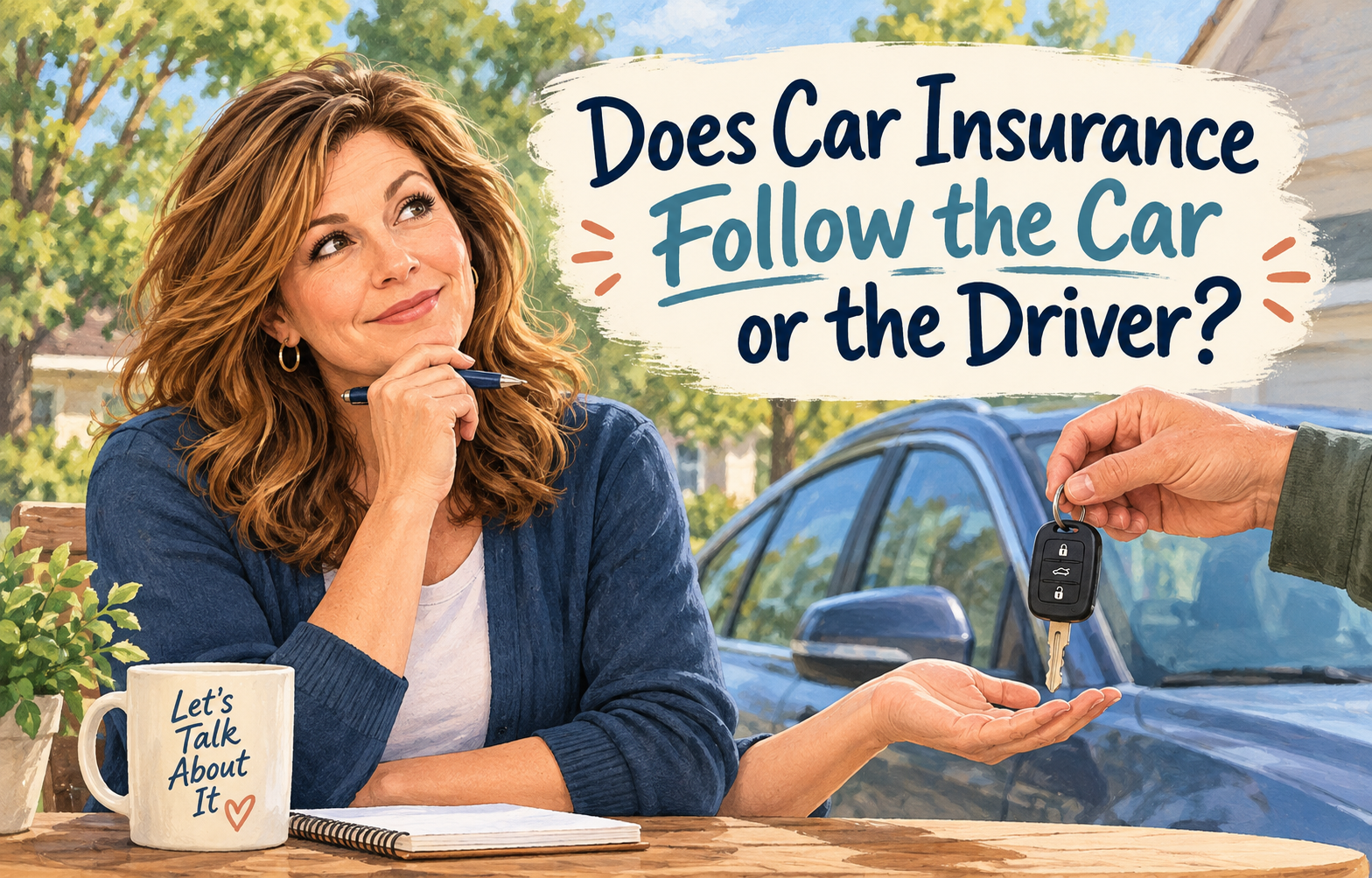
    Does Car Insurance Follow the Car or the Driver?

    Usually, car insurance follows the car first, but the driver matters too. If someone borrows your car with your permission and causes an accident, your auto policy may provide the primary coverage. Whether it pays, how much it pays, and what happens next depend on your policy, the driver, the type of loss, and state law.

    That sounds simple until your neighbor asks to borrow your car for an afternoon. You have insurance. They have a driver’s license. So everything should be fine, right?

    Maybe. Before you hand over the keys, there are a few things worth knowing.

    Does Car Insurance Cover the Car or the Person Driving?

    For many personal auto policies, liability coverage is tied to the insured vehicle and can extend to someone driving it with your permission. That’s why people often say insurance follows the car. But that phrase is a shortcut, not a promise that every driver and every situation is covered.

    Policies can limit coverage for excluded drivers, household members who should have been disclosed, certain uses of the vehicle, or drivers who do not meet the policy’s conditions. State rules can also change the result.

    What Happens If a Friend Borrows My Car and Causes an Accident?

    Imagine your friend Dana borrows your car to pick up groceries. At an intersection, Dana rear-ends another vehicle. If Dana is a covered permissive driver, your auto liability insurance will often respond first to covered injuries or damage Dana caused to other people, up to the applicable limits.

    That does not mean every expense disappears. If the claim exceeds your available liability limits, other coverage or personal responsibility may come into play. Dana’s own insurance might provide additional coverage in some circumstances, but you should not assume it will.

    And because the claim involves your policy, it could affect your insurance costs later, depending on the insurer and state.

    Will My Insurance Pay to Repair My Own Car?

    Liability coverage generally pays for covered harm to other people, not collision damage to your own car. If Dana crashes your car, collision coverage may help pay to repair it, subject to the deductible and policy terms. If you do not carry collision coverage, you may have to pay for your own repairs even when liability coverage pays for the other driver’s damage.

    That’s an important distinction. Having car insurance does not automatically mean every kind of damage to your car is insured.

    What If the Person Lives With Me?

    Someone who regularly drives your car, especially a household member, is different from a friend who borrows it once. Insurers commonly ask about licensed household residents and regular drivers when you apply for coverage or renew it.

    If a household driver is missing from the policy, coverage may be limited or disputed depending on the circumstances and state rules. If your spouse, adult child, roommate, or another resident drives your car, ask your insurer how that person should be listed. Do not wait until after an accident to find out.

    What If I Specifically Excluded That Driver?

    A named-driver exclusion can change the answer significantly. Where permitted, a policy may exclude coverage when a particular person drives your vehicle. Some states restrict or prohibit certain exclusions.

    If someone is listed as excluded, don’t assume giving them permission overrides the exclusion. Check the exact wording and your state’s rules.

    Does It Matter Why Someone Borrowed the Car?

    Yes. An occasional personal errand is not necessarily treated the same way as using your vehicle for delivery work, ridesharing, or other business activity. Standard personal auto policies may exclude or limit certain commercial uses.

    Likewise, taking your car without permission can raise very different questions from lending it willingly. These situations need a policy-specific review.

    What If I Borrow Someone Else’s Car?

    The same general principles can work in reverse: the vehicle owner’s insurance may respond first for a covered permissive driver. Your own policy might offer some protection, depending on its terms, the vehicle, and the circumstances.

    But your insurance is not a universal pass to drive any vehicle with full coverage. Rental cars, cars available for your regular use, and vehicles owned by people in your household may be treated differently. Before relying on your own policy, ask your insurer about the specific vehicle and use.

    What Should I Check Before Lending My Car?

    You don’t need to turn a quick favor into an insurance seminar. But a short conversation can prevent an expensive surprise.

    • Make sure the driver has a valid license and your permission.
    • Confirm the person is not excluded from your policy.
    • Ask your insurer about regular drivers or household members.
    • Check whether the intended use is personal or business-related.
    • Know your liability limits, collision coverage, and deductible.
    • If anything is unclear, call your insurer before handing over the keys.

    Here’s a question you can use: “If this person drives my car with my permission and has an accident, which parts of my policy would apply, and are there any restrictions?”

    So, Does Insurance Follow the Car or the Driver?

    In many everyday borrowing situations, the car owner’s policy is the first place to look. But the complete answer depends on who is driving, whether they had permission, what they were doing, the coverages purchased, and the rules where the accident happens.

    My advice is simple: don’t make an insurance decision based only on the phrase “insurance follows the car.” Ask about your actual policy. Five minutes checking today can save a lot of confusion later.

    Want a Little More Help?

    If this question has you looking more closely at your auto policy, start with whichever resource would be most useful.

    Want to know what to ask your insurance company?
    Get the free Insurance Questions Checklist.

    Want a clearer explanation of your auto coverage?
    Explore Let’s Talk About Auto Insurance.

    Want more practical answers about insurance, money, and everyday life?
    Join Emma’s Mailbox.


    Important: This article provides general educational information, not individualized insurance or legal advice. Coverage depends on the policy, endorsements, exclusions, facts of the loss, and applicable state law. Ask your insurer or an appropriately licensed insurance professional about your specific situation.
    Share This Conversation
  • What Happens If My Car Insurance Lapses for Just a Few Days?

    What Happens If My Car Insurance Lapses for Just a Few Days?

    You open an email from your insurance company and realize your car insurance ended three days ago.

    Maybe a payment didn’t go through. Maybe the renewal date slipped past you. Maybe you were switching companies and thought the new policy started the same day the old one ended.

    Whatever happened, now you have one question:

    How bad is a three-day lapse, really?

    A few days without car insurance may sound minor. Unfortunately, insurance doesn’t work quite like that.

    If your policy actually ended, even a short gap can matter.

    The good news is that finding a lapse doesn’t mean you should panic. It means you need to figure out exactly what happened and fix it before you drive again.

    Let’s walk through it.

    First, Make Sure You Actually Have a Lapse

    A late payment and a lapse in coverage are not necessarily the same thing.

    If you missed a payment, don’t assume your insurance disappeared at midnight on the due date. Depending on your state, insurer, and policy, there may be cancellation-notice requirements or time to make the payment before coverage actually ends.

    But don’t assume you have a grace period, either.

    Call your insurance company or check your policy account and ask a very specific question:

    “Is my policy currently active, and have I had any gap in coverage?”

    You want dates.

    If the answer is no, ask:

    • What date and time did my coverage end?
    • Can the policy be reinstated?
    • If it is reinstated, will there still be a gap in coverage?
    • What do I need to pay or provide today?

    That last part matters because reinstating a policy doesn’t necessarily erase the days when you weren’t insured.

    If your policy ended Monday and coverage starts again Thursday, you shouldn’t assume Tuesday and Wednesday magically became insured days.

    If There Really Was a Gap, Don’t Drive Until You Have Active Coverage

    This is the most important part of this article.

    If you confirm that you currently don’t have the insurance required to drive your vehicle, don’t drive it until coverage is active again.

    Not to work.

    Not to the grocery store.

    Not because you’re only going five minutes down the road.

    I know that’s inconvenient.

    It’s still better than finding out what an uninsured accident costs.

    Suppose you cause an accident while your policy isn’t active. There isn’t an insurance company sitting behind you waiting to pay a covered liability claim under a policy that wasn’t in force.

    You could be personally responsible for damage you cause, subject to applicable law.

    And we’re not just talking about somebody’s bumper.

    An accident can involve another vehicle, medical bills, lost income, damaged property, legal expenses, and injuries that continue costing money long after the cars leave the scene.

    A three-day insurance lapse can become a very expensive problem if the accident happens on day two.

    Can the Insurance Company Just Backdate My Coverage?

    Don’t count on it.

    This is one of those ideas that sounds reasonable until you think about how insurance works.

    Imagine someone could drive uninsured, have an accident Tuesday, buy insurance Wednesday, and ask the company to make the policy effective Monday.

    Everybody could wait until something bad happened before buying insurance.

    That’s not how insurance is supposed to work.

    If your old insurer can reinstate your policy, ask exactly what the effective date will be and whether there is any lapse between the old coverage ending and the reinstated coverage beginning.

    Don’t assume.

    Get the dates.

    Will a Short Lapse Make My Insurance More Expensive?

    It can.

    Insurance companies consider many factors when pricing coverage, and insurance history can be one of them. A break in continuous coverage may affect your rate or your eligibility for certain discounts, depending on the company, state, and circumstances.

    That doesn’t mean a three-day lapse automatically makes your insurance unaffordable.

    It means you shouldn’t deliberately create a gap because you think a few uninsured days won’t matter.

    This is especially important when you’re switching insurance companies.

    I would much rather see you have the new policy begin before the old policy ends than discover afterward that you misunderstood one of the effective dates.

    When you’re changing companies, look at the actual dates on both policies.

    Don’t rely on: “I think the new one starts Friday.”

    Check.

    Your State May Care About the Lapse Too

    Your insurance company isn’t necessarily the only organization involved.

    States have their own insurance and vehicle-registration rules. Depending on where you live and what happened, a lapse could lead to consequences involving your vehicle registration, driver’s license, fines, proof-of-insurance requirements, or other penalties.

    That’s why I don’t want to give you one universal rule and pretend it applies in all 50 states.

    It doesn’t.

    If you’ve confirmed that your insurance actually lapsed, check with your state’s DMV, BMV, motor-vehicle agency, or insurance department to find out whether you need to do anything besides restoring your insurance.

    This becomes especially important if you’ve received a notice from the state.

    Don’t toss that letter on the counter and hope your new insurance policy makes it disappear.

    Find out what they’re asking you to do.

    If You Have a Car Loan or Lease, There’s Another Problem

    If you’re financing or leasing your car, pull out your loan or lease agreement.

    Your lender probably requires you to maintain certain insurance coverage on the vehicle.

    Why?

    Because until that loan is paid off, they have a financial interest in the car too.

    If your required coverage lapses, you may be violating the terms of your financing agreement.

    A lender may also purchase insurance to protect its interest in the vehicle and charge you for it. This is often called force-placed or lender-placed insurance.

    Don’t mistake that for a nice backup policy designed for you.

    Lender-placed coverage can be expensive and may primarily protect the lender’s financial interest rather than give you the coverage you would have selected for yourself.

    If you have a loan or lease and your insurance has lapsed, contact your insurer promptly and find out whether you also need to provide updated proof of coverage to your lender.

    What If I’m Not Driving the Car?

    This is where people sometimes get into trouble.

    You might think: “The car is sitting in my driveway. Why should I pay for insurance this month?”

    Depending on your situation, there may be ways to reduce or change coverage when a vehicle isn’t being used.

    But simply stopping payment isn’t a plan.

    Your state may have rules involving insurance and vehicle registration. If the car is financed or leased, your lender may require certain coverage even while you’re not driving it.

    And your car can still be damaged while parked.

    Theft, hail, fire, falling objects, vandalism, and other losses don’t wait for you to put the key in the ignition.

    If you know you won’t be driving for an extended period, call your insurer before canceling anything. Then check your state’s requirements and, if applicable, your lender’s requirements.

    There may be a perfectly reasonable way to handle the situation.

    Accidentally letting the policy disappear isn’t it.

    What Should I Do If My Car Insurance Has Already Lapsed?

    Let’s make this practical.

    If you discovered a lapse today, here’s the order I’d use.

    1. Stop driving until you confirm you have active coverage.

    If you’re currently uninsured, don’t add another problem to the one you’re already fixing.

    2. Contact your insurance company.

    Ask whether the policy can be reinstated and exactly when the reinstated coverage becomes effective.

    3. Get the dates in writing.

    You want to know when the old coverage ended and when the new or reinstated coverage begins.

    4. If the old policy can’t be reinstated, start shopping for replacement coverage immediately.

    Compare more than the price. Make sure you’re comparing similar coverages, limits, and deductibles.

    5. Check your state’s requirements.

    Find out whether the lapse affected your registration or created any additional steps you need to complete.

    6. If you finance or lease the vehicle, check your agreement and contact the lender if necessary.

    You may need to provide proof that required coverage is active again.

    7. Keep your new proof of insurance.

    Once everything is active, save the insurance card or other proof somewhere you can easily reach it.

    Then take five more minutes and figure out why the lapse happened.

    Fix the Reason It Happened

    This part gets overlooked.

    Getting insured again fixes today’s problem.

    It doesn’t necessarily prevent the next one.

    If your card expired, update the payment information.

    If there wasn’t enough money in the account when the automatic payment hit, consider whether a different payment date or billing arrangement would work better.

    If you missed an email, check your contact information and notification settings.

    If the premium became unaffordable, don’t just wait for the next cancellation notice. Ask about payment options, available discounts, different deductibles or coverage choices that are appropriate for your situation, and shop other insurers before the next payment is due.

    And if the lapse happened while switching insurance companies, write down one rule for next time:

    New coverage first. Old coverage second.

    Confirm the new policy is active before ending the old one.

    A Few Days Can Matter, but Fixing It Quickly Matters Too

    If you just discovered that your car insurance lapsed, I don’t want you spending the rest of the morning beating yourself up over it.

    I want you fixing it.

    Find out whether the policy actually lapsed.

    If it did, don’t drive uninsured.

    Call the insurer.

    Get the exact dates.

    Restore coverage or replace the policy.

    Check whether your state or lender requires anything else.

    Then fix whatever caused the lapse so you don’t have to do this twice.

    Insurance is much easier to deal with when we catch problems before they turn into claims.

    And if you’re shopping for replacement coverage, remember that the cheapest number on the screen doesn’t tell you whether two quotes actually provide the same protection. Compare the coverages, limits, deductibles, and important differences before deciding.

    That’s a lot less exciting than finding a bargain.

    It’s also a lot more useful.

    Want a Little More Help?

    If this lapse has you taking a closer look at your car insurance, you do not have to sort through everything at once. Start with the next thing that would actually help.

    Want to be better prepared before you call or compare coverage?
    Get the free Insurance Questions Checklist.

    Want a clearer explanation of how auto insurance works?
    Take a look at Let’s Talk About Auto Insurance.

    Want practical insurance, money, and everyday-life help in your inbox?
    Join Emma’s Mailbox.


    Important: Insurance laws, cancellation rules, registration requirements, policy terms, and lender requirements vary by state and situation. This article is general educational information, not individualized insurance, legal, or financial advice. Check your policy and contact your insurer, state insurance department or motor-vehicle agency, lender, or an appropriately licensed professional when you need information specific to your situation.

    Share This Conversation
  • Someone Hit My Parked Car. What Do I Do About Insurance?

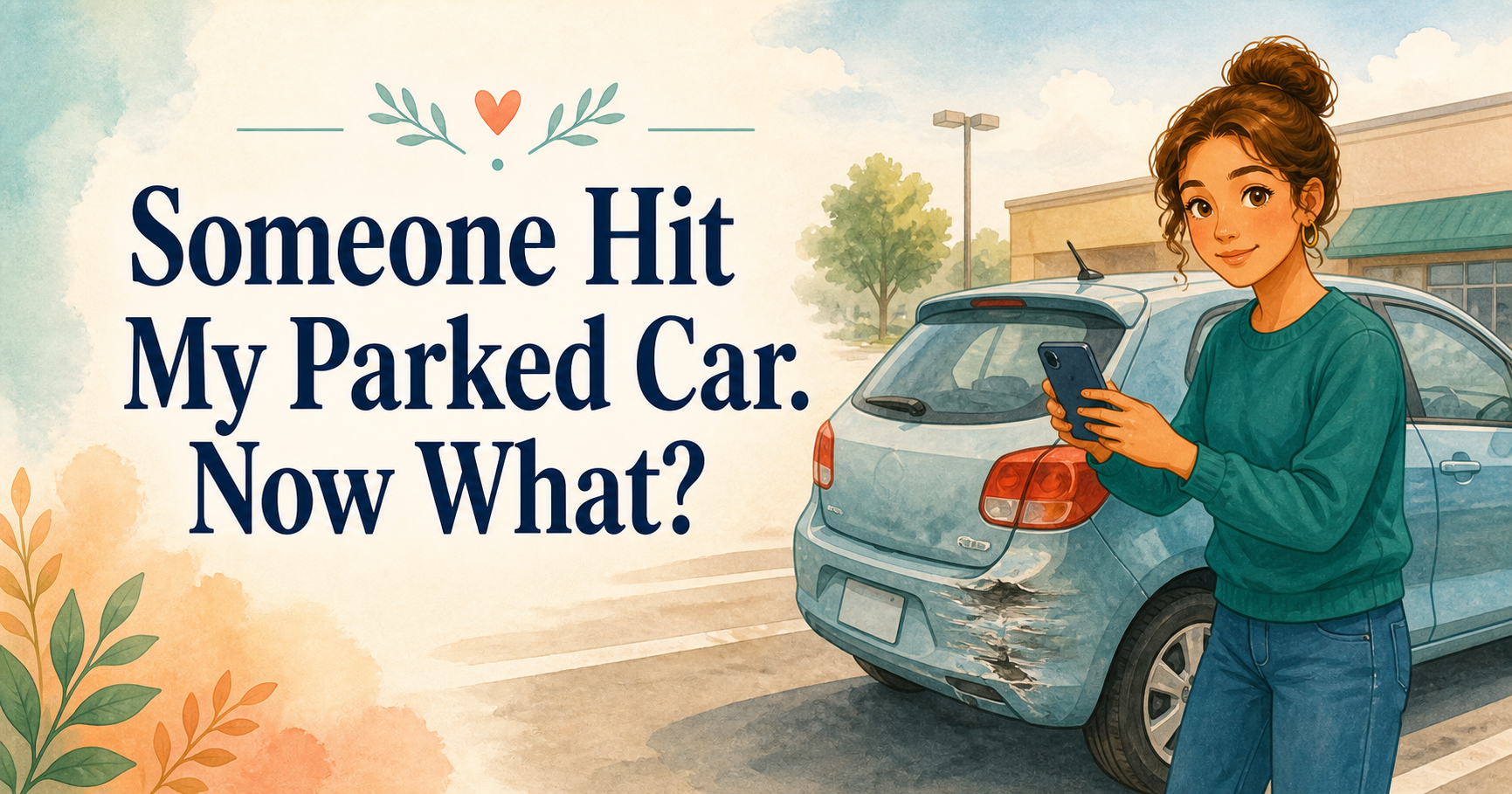
    Someone Hit My Parked Car. What Do I Do About Insurance?

    You walk back to your car.

    Something looks wrong.

    Very wrong.

    There’s a dent that wasn’t there before. Maybe a broken light. Scraped paint. A bumper hanging at an angle bumpers generally aren’t supposed to hang at.

    And you weren’t even in the car.

    Wonderful.

    So now what?

    The answer depends partly on whether the person who hit you is still there—or at least had the decency to leave useful information.

    Either way, don’t start with the insurance company.

    Start with the car.

    First, Take a Look Around

    Before moving anything, take a minute if it’s safe to leave the car where it is.

    Look at the damage and the area around it.

    Is there another damaged vehicle nearby? A note on your windshield? Broken pieces on the ground? Cameras on a nearby building? Anyone who may have seen what happened?

    Then get your phone out.

    Take pictures. A lot of them.

    Get:

    • The whole car
    • Close-ups of the damage
    • The area around the vehicle
    • Where the car was parked
    • Any debris
    • Nearby signs or markings
    • Any note left on the car

    If another vehicle is involved and the driver is there, photograph that damage too if you can do so safely.

    We’re preserving what everything looked like before people move on with their day.

    If the Driver Is Still There

    Good.

    Well—not good that they hit your car. But much better than disappearing.

    Exchange information. Get their:

    • Name and contact information
    • Driver’s license information where appropriate
    • License plate number
    • Insurance company
    • Policy or insurance-card information
    • Vehicle details

    Also get contact information from anyone who saw what happened.

    Give the other driver the information you’re required to provide, too.

    Keep the conversation simple. You don’t need a parking-lot debate about fault. Collect the facts and let the claims process handle the rest.

    If you’re unsure what to ask for, the free Insurance Questions Checklist can help you organize your questions before you make the calls.

    If They Left a Note

    Take a picture of it before doing anything else.

    Paper has a long history of disappearing at exactly the wrong moment.

    Then check what’s actually on it. Ideally, you have enough information to identify the driver and contact their insurer.

    If the note says:

    Sorry about your car. —Mike

    Mike has left us emotionally richer and practically nowhere.

    Save what you have anyway. Then look for witnesses or nearby cameras that might help identify the vehicle.

    If Nobody Is There

    Now we may be dealing with a hit-and-run.

    Document the damage and surrounding area before leaving if it’s safe. Then contact the police or appropriate local law-enforcement agency and ask how property-damage hit-and-run reports are handled in your area.

    You may receive an incident or report number. Save it. Your insurer may ask for it.

    Reporting procedures vary, so don’t assume what your city, county, or state requires. Ask.

    Look for Cameras—but Don’t Become a Detective

    Parking garage? Store parking lot? Apartment complex? Office building?

    Someone may have video.

    If you see cameras nearby, ask the property owner, manager, or security office whether footage may exist. Do it fairly quickly. Video isn’t always kept for long.

    But don’t spend three days conducting your own investigation. Check the obvious sources, preserve what you can, and let the appropriate people handle the rest.

    Now Call Your Insurance Company

    Once you’ve documented the scene and handled any appropriate police reporting, contact your insurer.

    Tell them:

    • Your vehicle was parked
    • You weren’t in it
    • You found damage
    • Whether the other driver is known
    • Whether insurance information was left
    • Whether you have a police or incident report

    Then ask what your options are.

    Depending on the circumstances, your coverage, and state rules, the claim might involve the other driver’s property-damage liability coverage, your collision coverage, or uninsured-motorist property-damage coverage where available and applicable.

    Don’t guess which one applies. Ask the insurer to explain it based on the facts and your policy.

    If insurance terminology starts getting in the way, keep the free Insurance Terms Cheat Sheet nearby while you talk.

    If You Know Who Hit You

    If the other driver is identified and insured, their property-damage liability coverage may respond if they’re responsible for the accident.

    You may be able to pursue the claim through their insurer. Depending on your coverage and circumstances, you may also have the option to use your own insurer and let the companies sort out reimbursement later.

    Ask what the practical differences are:

    • Will a deductible apply if I use my own coverage?
    • How will the repairs be handled?
    • What happens while the other insurer is deciding responsibility?
    • Do I have rental reimbursement or another transportation option?
    • What documents do you need from me?

    You don’t need to decide everything while standing beside the car. Get the options first.

    What If You Have No Idea Who Did It?

    This is where your own coverage becomes more important.

    Collision coverage generally applies to physical damage caused by a collision with another vehicle or object, subject to the policy and deductible. Uninsured-motorist property-damage coverage may apply to some hit-and-run losses in some states, but availability, definitions, and requirements vary.

    That means:

    I wasn’t driving.

    doesn’t automatically mean:

    My insurance can’t help.

    But it doesn’t mean every policy handles parked-car damage the same way, either.

    Ask this:

    What coverage on my policy could apply to damage from an unknown driver hitting my parked car?

    That’s the question.

    Your Deductible May Matter

    Suppose the repair costs $1,800 and the applicable deductible is $1,000.

    Depending on which coverage handles the claim, you may be responsible for that $1,000.

    Now suppose the damage is $700.

    A claim under coverage with a $1,000 deductible looks very different.

    Before deciding what to do, understand:

    • The approximate repair cost
    • Which coverage might apply
    • The deductible
    • What the insurer needs from you

    Calling to ask questions and proceeding with a claim may not be the same decision. Be clear about what the insurer is opening or recording when you call.

    Get a Repair Estimate

    That scrape may be cosmetic.

    Or it may become an expensive lesson in what modern bumpers, sensors, cameras, and paint cost.

    A repair estimate gives you something concrete. If the damage is near or below your deductible, that may affect your decision. If the repair is substantial, insurance becomes more relevant.

    Initial estimates can also change when a shop finds hidden damage after taking the vehicle apart.

    Keep the estimate and ask how supplements or additional damage are handled if repairs begin.

    What If You Were Parked Illegally?

    Maybe you were double-parked. In a loading zone. Partially blocking something.

    That can complicate the facts, but we’re not deciding liability here. Responsibility may depend on the details and applicable state law.

    Tell the truth about where the vehicle was and what happened. Let the insurers—and, when necessary, the appropriate authorities—evaluate fault.

    Don’t rewrite the scene because you’re worried something makes you look bad. Accurate information is easier to evaluate than a story that changes later.

    Does a Parking Lot Change Anything?

    People often ask whether insurance works differently because an accident happened on private property.

    Don’t assume a parking lot makes insurance disappear.

    What may become harder is determining what happened and who was responsible. Parking lots have cars backing out, unusual traffic patterns, pedestrians, limited witnesses, and sometimes no police response for minor damage.

    That’s why the pictures, notes, witness information, and camera questions matter.

    Document what happened. Then let the claim be evaluated using the actual facts.

    Should You Call the Other Driver’s Insurer Yourself?

    If you have the other driver’s insurance information, you may be able to report the claim directly to that company.

    It can still be useful to notify your own insurer, especially if the damage is substantial or responsibility is unclear. Your company can explain the options available under your policy.

    You aren’t bothering them.

    This is quite literally why you have an insurance company.

    What About a Rental Car?

    If the other insurer accepts responsibility, rental or loss-of-use expenses may become part of the claim depending on the circumstances and applicable rules.

    If you use your own policy, rental reimbursement generally requires that you bought that optional coverage. It usually has daily and total limits.

    So don’t assume:

    My car is in the shop, therefore insurance pays for a rental.

    Check first.

    Before you rent the luxury SUV.

    Please.

    Will a Parked-Car Claim Raise Your Rate?

    Maybe.

    I know. Unsatisfying.

    The effect can depend on state rules, insurer practices, the coverage involved, your claims history, and other rating factors.

    Don’t avoid reporting serious damage solely because someone online said every claim raises your rate. Don’t assume a claim can never affect anything, either.

    Ask how claims are handled under your policy and in your state. Then make the decision using information that applies to you.

    For more plain-language insurance guidance, visit the TalkinWithEmma blog.

    If the Damage Is Small, Do You Have to File a Claim?

    Not necessarily.

    Maybe someone scraped the bumper. The repair is $300. Your deductible is $1,000. The other driver is unknown.

    You may decide to handle it yourself.

    First, make sure the damage really is small. Sensors and other equipment can hide behind parts that look ordinary. What appears to be a minor scrape may cost more than expected.

    Get enough information to make the decision. Don’t make it from the parking lot while you’re still angry.

    Don’t Repair It Before You Document It

    If the vehicle needs immediate work for safety, that’s different.

    Otherwise, give the insurer a chance to explain what documentation or inspection it needs before repairs erase the evidence.

    Keep:

    • Photos and videos
    • Repair estimates
    • Receipts
    • The police or incident-report number
    • The other driver’s note
    • Witness information
    • Notes from calls with insurers and repair shops

    Future You shouldn’t have to reconstruct the whole thing from memory.

    If you want a simple place to organize policy and quote details, see the resources on the TalkinWithEmma Tools page.

    Someone Hit Your Parked Car. Now What?

    Start with the scene.

    Take pictures. Look for a note, witnesses, or obvious cameras. Exchange information if the driver is there. If the driver left and can’t be identified, ask the appropriate police agency about a hit-and-run report.

    Then contact your insurer.

    Find out what coverage might apply, whether a deductible applies, and what documentation is needed. Get a repair estimate before assuming the damage is tiny—or enormous.

    You weren’t driving. The car was minding its own business.

    Apparently someone else’s car was not.

    Now document what happened, find out which insurance may apply, and work through it from there.

    One step at a time.

    Want a Little More Help?

    If you’re dealing with damage to your car, you do not have to learn every part of auto insurance at once. Start with the next thing that helps you get organized.

    Want to be better prepared before you call or compare coverage?
    Get the free Insurance Questions Checklist.

    Want a clearer explanation of how auto insurance works?
    Take a look at Let’s Talk About Auto Insurance.

    Want practical insurance, money, and everyday-life help in your inbox?
    Join Emma’s Mailbox.


    This article is for general educational and informational purposes only and isn’t intended as individualized insurance, financial, legal, or repair advice. Insurance coverage, deductibles, fault rules, hit-and-run procedures, reporting requirements, and claims practices vary by policy, insurer, and state. Contact your insurer, licensed insurance professional, appropriate law-enforcement agency, state insurance regulator, or another qualified professional when needed.

    Share This Conversation